“Attack wins you games, defence wins you titles.” (widely attributed to Sir Alex Ferguson)
This weekend, Orlando Pirates host Kaizer Chiefs in the first Soweto derby of the season. A Pirates win would open up an 11-point gap between the teams, which would be significant while the season is still in single-digit games. A win for Chiefs would reignite a campaign that hasn’t taken off properly under Fernando da Cruz. A draw would be a better result for Chiefs relatively, but the big winner would be Sundowns, who play later that evening and can open up some breathing room at the top.
Pirates made favourites
That Pirates are favourites for this one should not come as a big surprise (bookmakers like Easybet implying a 50 - 55% chance of victory). After all, they are the defending champions, have won six of the last eight derbies (L1, all comps), and are yet to concede a league goal from open play this season (P8). The latter point is more telling because the defensive improvements that took Pirates from a good team to an elite one are mainly what has helped them ‘overtake’ Chiefs as the pre-eminent force from Soweto. And it’s not just about this season - to fully grasp the size of the shift, trace it back by decade.
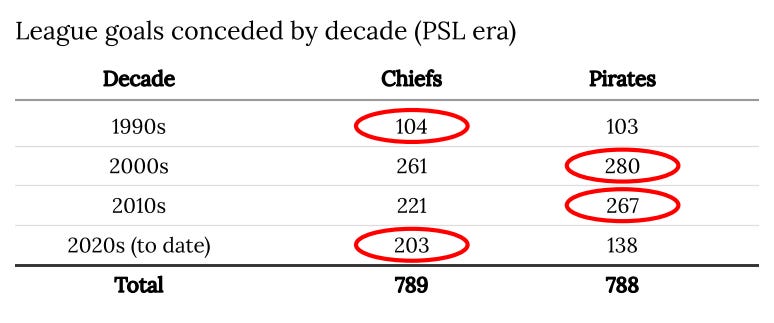
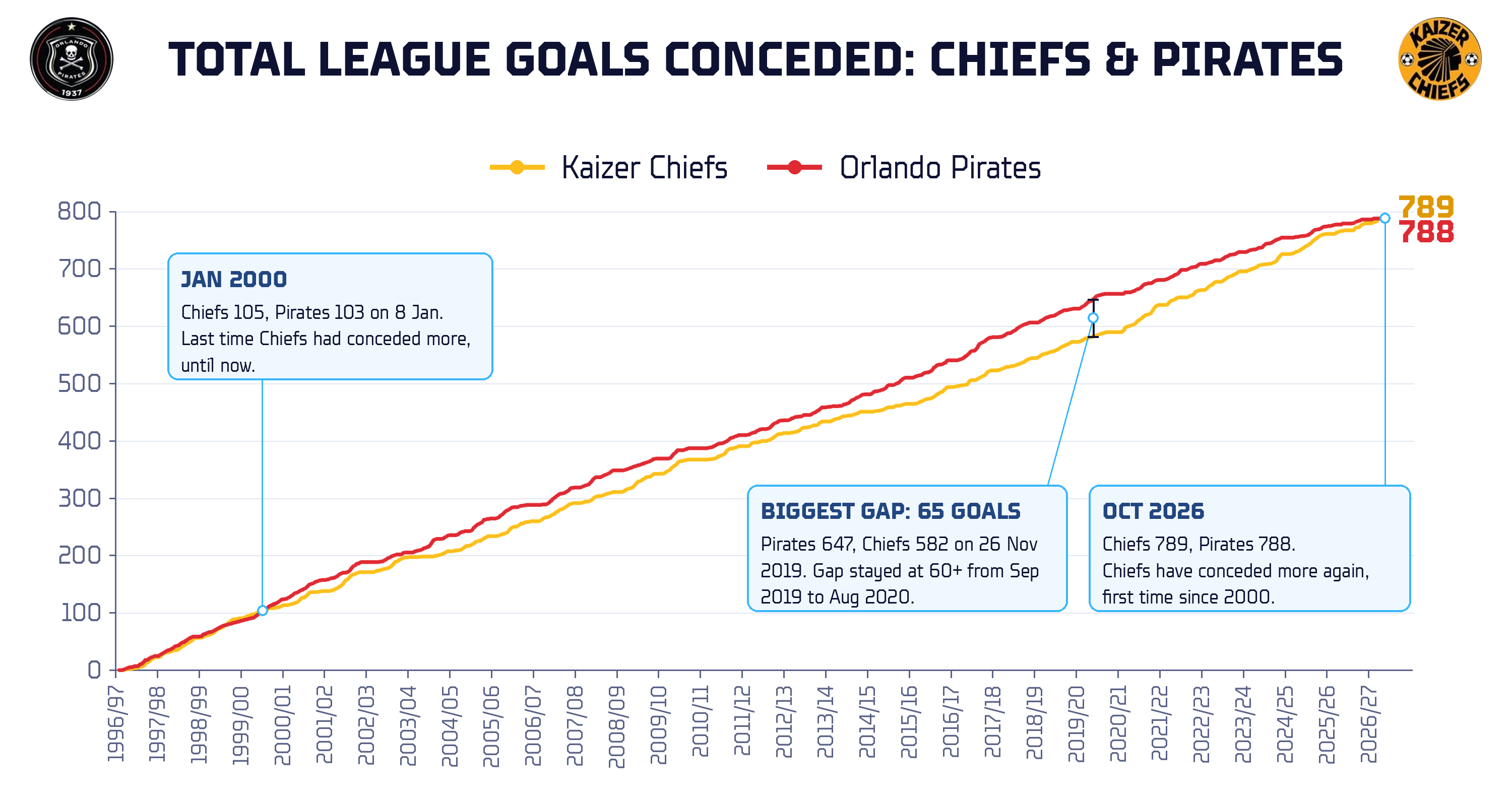
The teams were pretty level defensively in the few years of the 90s. This was the pre-xG era, so we’ll use goals conceded as the proxy. A combination of once-in-a-lifetime goalkeepers, innovative coaches and legendary Back 4s meant Chiefs had the edge throughout the 2000s and 2010s. Post-pandemic, Chiefs have regressed in that department, conceding more than Pirates in all but one campaign. For years the teams have been on a defensive collision course, and crossed each other in the last gameweek before the derby. Pirates won 3-0, Chiefs drew 1-1 and quietly went above them in the thing that wins you titles. For the first time since January 2000, Chiefs have cumulatively conceded more goals than Pirates (789-788), who have flatlined.
The same applies to recent underlying numbers like xG, where Pirates average 0.6 xG conceded per game in the last three seasons, by far the best defence in the division in that period. If defences win titles, no wonder Pirates are in their third consecutive season challenging for one.
Attack wins games, and Pirates have been fixing theirs too. The radar below shows that on many attacking metrics, Pirates are better than Chiefs. From goals to shots on target, to big chances created and touches in the opposition box, Pirates lead their neighbours.
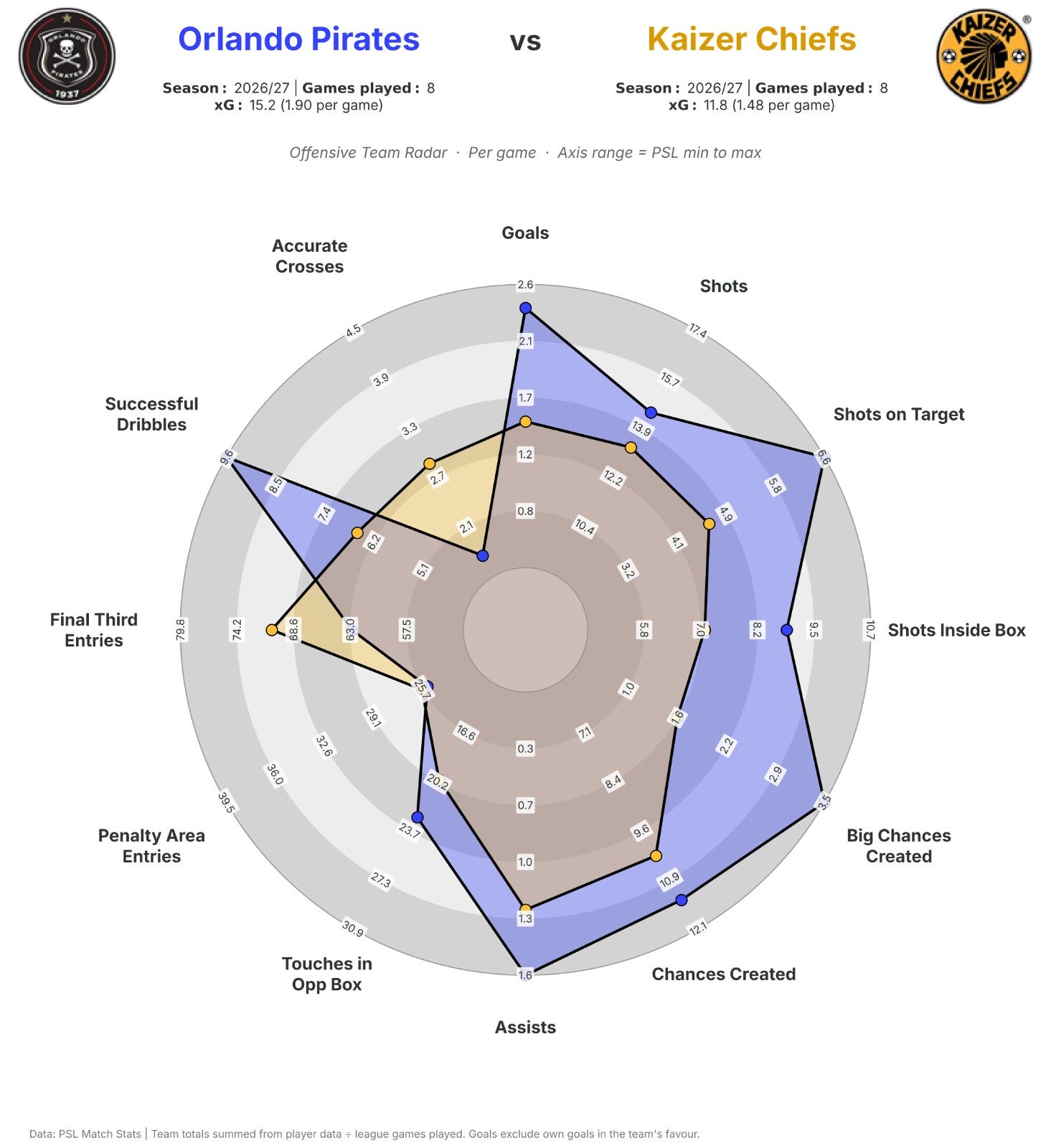
There’s no clear attacking metric here where Chiefs are near the top of the league, except final third entries, but those mean little if they don’t end up in shots and goals.
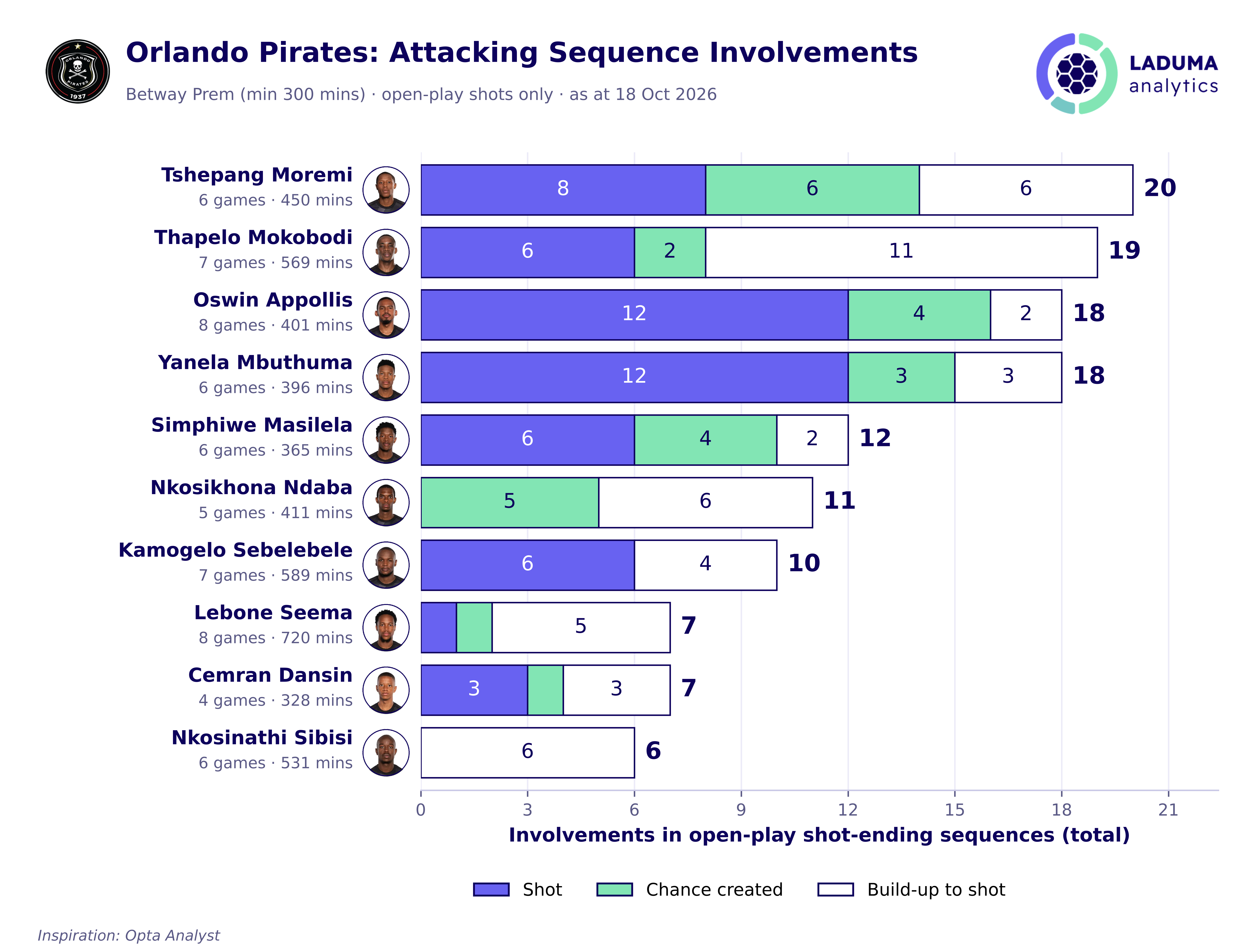
Last week, we looked at attacking sequence involvements, which count each time players take shots, create chances or sit in open-play build-up. We highlighted how two of Pirates’ best players are in the top five attackers in the league. Pirates’ raw sequence involvement chart shows Tshepang Moremi leads Pirates with 20 involvements, but the near-equal split in his bars shows he can build, create and finish attacking moves for Pirates. It’s a versatility Pirates need after the departure of creatives like Sipho Mbule, Relebohile Mofokeng and Patrick Maswanganyi. Chiefs will also have to be aware of Oswin Appollis and Yanela Mbuthuma, who are the main finishers, while Thapelo Mokobodi is involved from deeper but still carrying a decent shot threat.
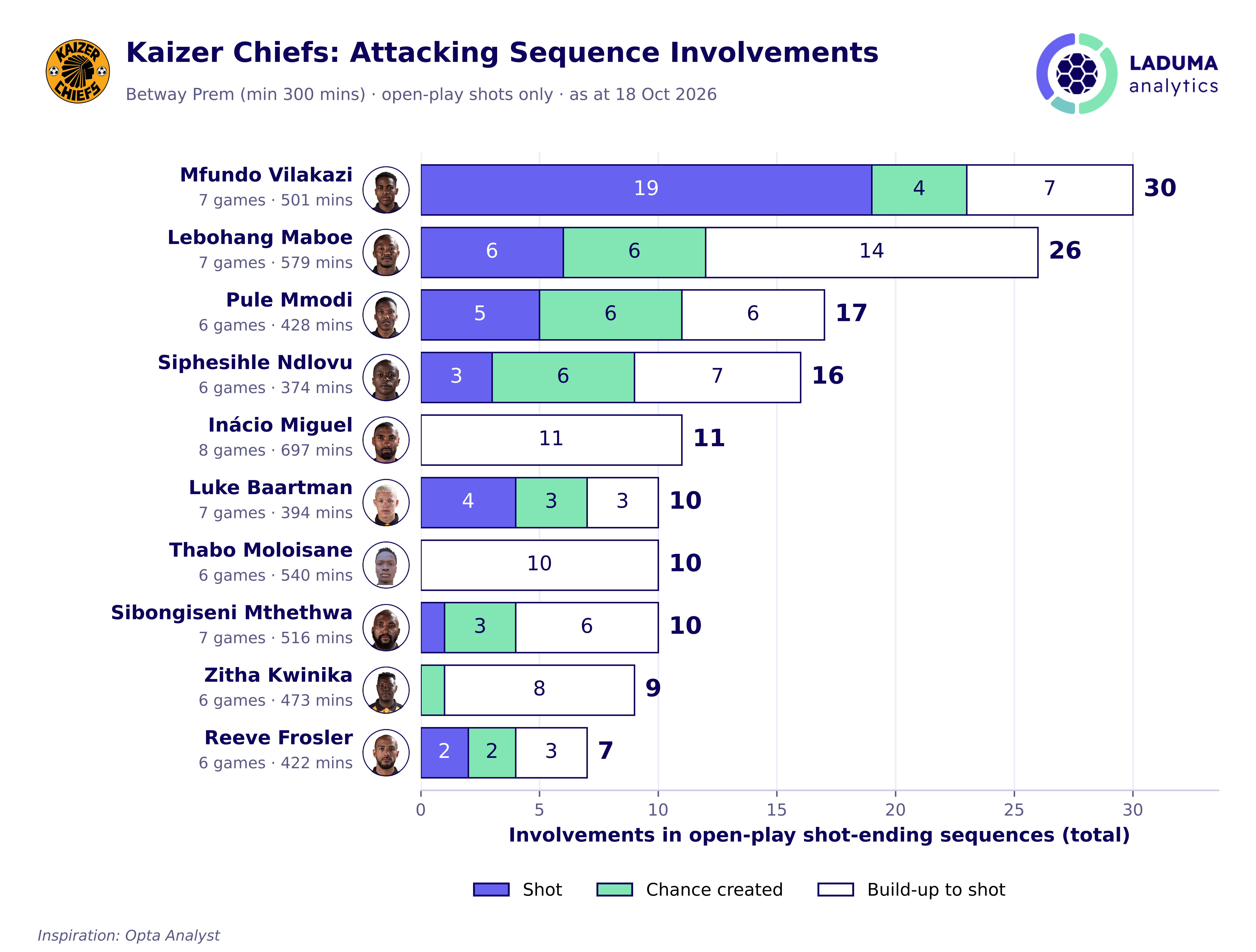
As for Chiefs, their sequences this season have ended most often with one player, Mfundo Vilakazi. Alone, he’s taken nearly as many shots as the next nine players in this chart, but at 0.07xG per shot, the high volumes can be misleading. Overall, Chiefs’ shooting is more concentrated than Pirates’, and they will need to find alternative attacking routes and patterns to trouble a defence yet to concede from open play.
Pirates go into the game eight points clear of Chiefs, the biggest lead they have carried into a derby in the 23 meetings where the teams met having played an equal number of games. Yet, the derby rarely respects the table; the side on top wins 30% of them, and the side below 25%, a minor margin.
This newsletter was sponsored by Easybet, whose support made this edition possible. Use code LAD50 at Easybet: http://bit.ly/LAD50